2025 Tile Trends and Innovation
The 2025 tile industry centers on natural replication via 3D digital relief, sustainable manufacturing, and warm earthy palettes (beige, espresso) over cool greys. Key shifts include large-format seamless slabs (120 x 280cm), 20mm thickness outdoor porcelain, and high-variation textures (V2–V4+).
In a hurry? Take these tile trend tips with you on the go!


Technology and Manufacturing Innovations
3D Printing & Digital Relief
Advancements in digital applications reshape tile tactile quality:
-
Layering Tech: Uses shape ink, digital glue, and decorative ink to create precise physical textures that mimic natural materials.
-
Surface Finishes: Enables realistic depth for soft-polished, matt, and lappato (semi-polished) effects.
Sustainability & ESG Integration
Eco-conscious manufacturing practices dictate production standards:
-
Energy Management: Deployment of energy-efficient firing processes to reduce carbon footprints.
-
Resource Optimization: Integration of recycled content and waste-reduction cycles to meet global green building standards.


Surfaces and Finishes
Matt, Relief, and Semi-Polished Trends
Matt tiles remain timeless, celebrated for their understated elegance and versatility.
Relief surfaces, achieved through digital applications, add texture and depth, making spaces feel more dynamic. Semi-polished finishes bridge the gap between glossy and matt, offering a sophisticated aesthetic that balances visual appeal with functionality.
Natural Marble and Stone Effects
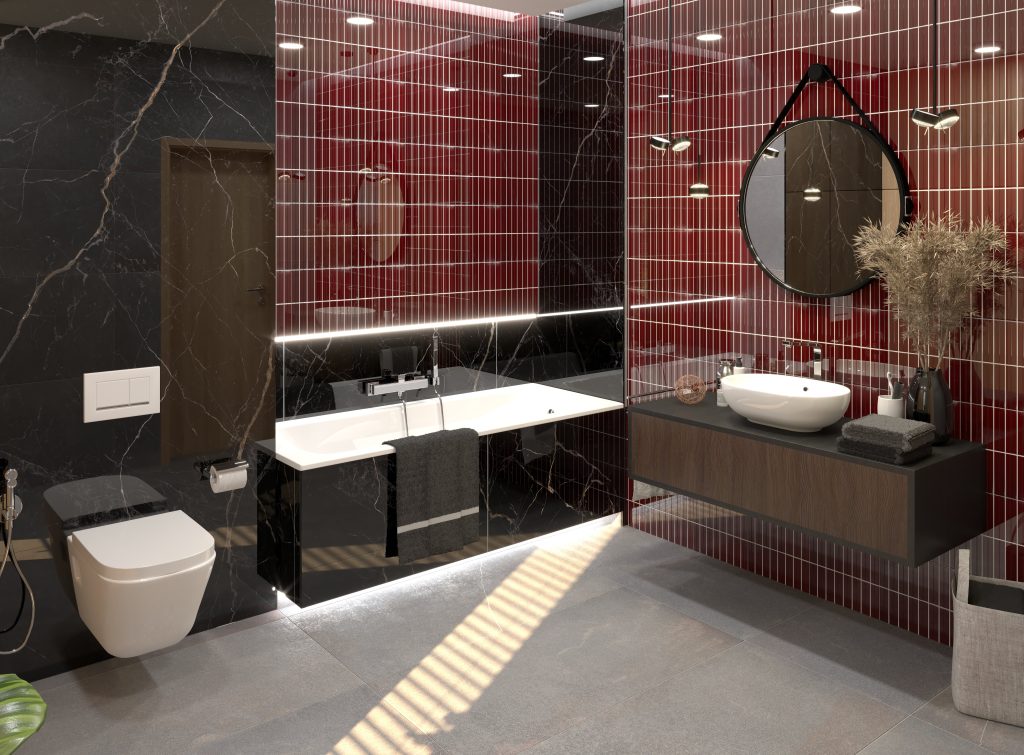
Digital relief techniques replicate natural marble and stone with remarkable accuracy, capturing the nuances of vein patterns and textures.
These effects create tiles that exude authenticity, bringing the beauty of nature indoors while maintaining the durability of ceramics.


Design Trends
Natural Materials
The 2025 tile trends pay homage to natural materials like stone, marble, clay, and wood. These elements bring warmth and authenticity to interiors, with designs that highlight finer veins and soft textures. Fossil stone, limestone, and quartzite remain prominent, showcasing intricate details that elevate modern spaces.
Subtle Veins, Pastel Hues, and Cross Cut Techniques
Delicate patterns and warm earthy tones dominate this year’s designs, creating a sense of calm and cohesion. Cross cut techniques, particularly with quartzite and travertine, add depth and movement to tiles, transforming them into stunning focal points.


Evolving Design Variations
V-Rating Spectrum (V2 to V4+)
Categories V2 to V4+ introduce a spectrum of design options, from homogeneous looks to rich, textured patterns.
These variations offer endless possibilities for residential and commercial spaces, ensuring adaptability to different styles and preferences:
-
V2 (Slight Variation): Clearly distinguishable differences in texture and/or pattern with similar colors.
-
V3 (Moderate Variation): While the color amount on one tile indicates the color on others, the texture/pattern varies significantly.
-
V4+ (Substantial/Random Variation): Random color and/or texture differences from tile to tile, creating a unique final installation.
Color Palette 2025
Warm Earthy Tones
Beige leads the way as the top colour trend, complemented by espresso browns, caramel, and creamy whites. These tones bring warmth and comfort, aligning with the growing preference for natural and earthy palettes.


Decline of Green and Grey Tones
While muted greens and greys remain present, their popularity has waned in favour of warmer shades. This shift reflects a desire for more inviting and uplifting colour schemes in interior design.
Size and Thickness
Large Slabs for Seamless Designs
Tiles in larger formats, such as 120×280 cm and 160×320 cm, continue to gain popularity. These slabs reduce grout lines, creating sleek, seamless surfaces that enhance modern aesthetics.


Outdoor Solutions with 20 mm Thickness
Tiles with a 20 mm thickness offer durability and style for outdoor applications, making them ideal for landscaping and exterior spaces. These tiles combine functionality with design, ensuring a cohesive look across indoor and outdoor areas.
Decorative and Functional Tiles
Deco Tiles and Geometric Motifs
Deco tiles, available in geometric patterns and fluted relief designs, add character to spaces.
Whether used as accents or base tiles, they enhance the visual appeal of interiors and exteriors alike. Red travertine is experiencing a revival, while oxyde finishes add a broader, dynamic color range.


Ambience and Mood
Uplifting Atmospheres
Bright colours and natural light-inspired designs create inviting and energising environments. These elements reflect the industry’s focus on fostering positive and uplifting spaces.
Personalised Spaces and Natural Touches
The emphasis on personalisation allows tiles to become expressions of individuality. Incorporating natural materials, plants, and organic textures brings a refreshing touch of nature into modern interiors.


Calming Scents in Design Concepts
Infusing spaces with soothing scents enhances the overall experience, aligning with biophilic design principles. These sensory elements contribute to creating serene and harmonious environments.
Get Inspired! Access Your E-Catalogue Today!
We’re delighted to offer consultation and tailored recommendations to support your projects and more.
FAQ: People Also Ask
What are the main tile design trends for 2025?
The core trends are natural aesthetics (stone, marble, clay, wood), warm earthy color palettes, tactile relief surfaces created via 3D printing, and seamless large-format porcelain slabs.
What colors are trending for floor tiles in 2025?
Warm, earthy colors dominate the market. Beige leads the trend, paired with espresso brown, caramel, and creamy white. Cool greys and muted greens are declining in popularity.
What is a digital relief tile?
Digital relief is an innovative manufacturing technique that uses shape ink and digital glue to apply physical, three-dimensional textures onto a tile’s surface. This allows it to mimic the veins and grooves of natural stone realistically.
Why are large-format tile slabs trending?
Large slabs (like 120 x 280 or 160 x 320cm) are trending because they significantly reduce the number of grout lines. This creates a visually continuous, seamless appearance and makes surfaces easier to clean.
What do tile shade variations V2 to V4+ mean?
V-ratings measure a tile’s visual variation. V2 indicates slight pattern or texture variation, V3 shows moderate differences, and V4+ represents substantial, highly random variation designed to mimic natural, non-repeating materials.